
Illinois Bankruptcy Records
Illinois bankruptcy records are public court files kept by three federal districts that cover the whole state. The Northern District handles cases near Chicago and 18 surrounding counties. The Central District serves 46 counties from Springfield to Urbana. The Southern District takes in 38 counties near East St. Louis and Benton. You can search these bankruptcy records through PACER, the federal case lookup system, or go to a court office in person. Each district runs its own clerk office and e-filing system. All three courts sit in the Seventh Circuit and follow both federal rules and their own local rules for bankruptcy cases filed in Illinois.
Illinois Bankruptcy Records Quick Facts
How to Search Bankruptcy Records in Illinois
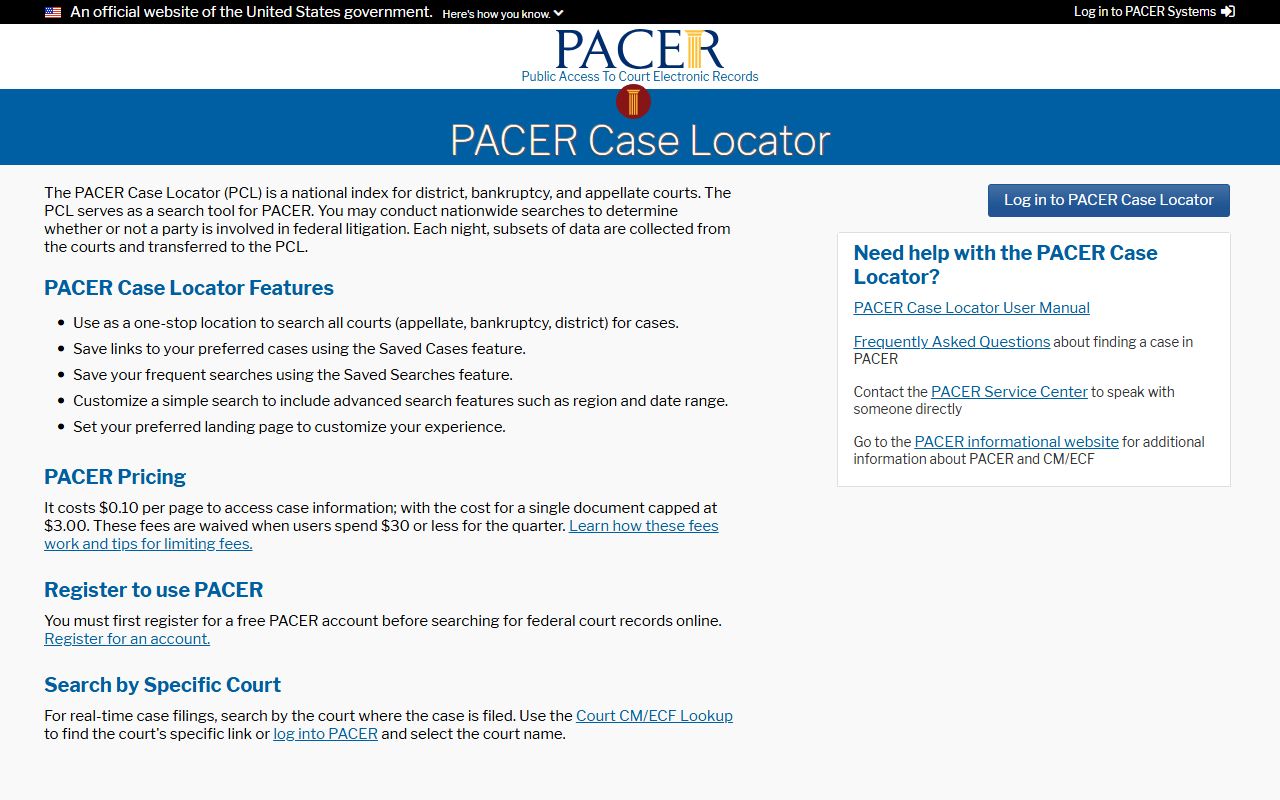
PACER is the main tool for searching bankruptcy records in Illinois. It stands for Public Access to Court Electronic Records. Anyone can use it. You set up a free account and search by name or case number. The system covers all three Illinois districts and every federal court in the country. Fees are low. Most page views cost ten cents each. Users who stay under $30 in a quarter pay nothing at all. The PACER Case Locator lets you find which court holds a specific case, and that makes it a good starting point for any search of bankruptcy records in Illinois.
The PACER Case Locator pulls data from all federal courts, so you can find Illinois bankruptcy records even if you do not know which district handled the case.
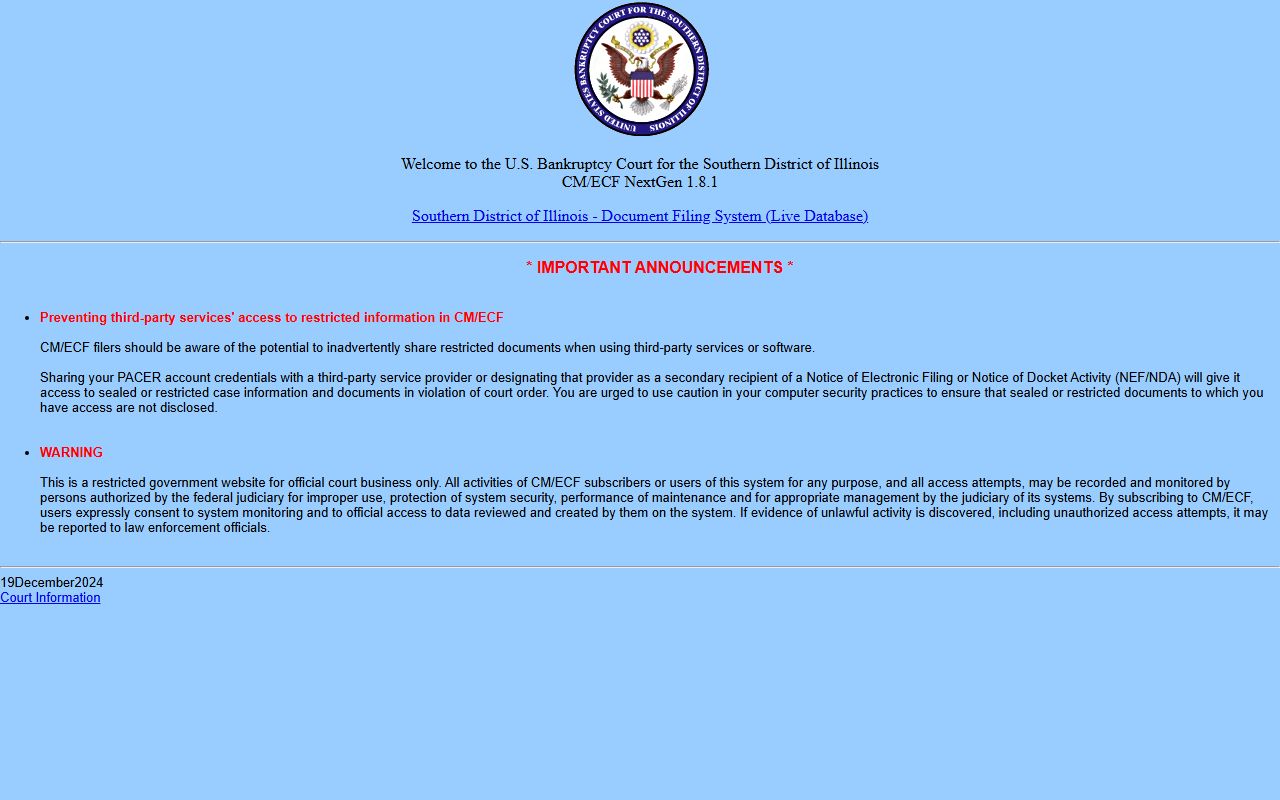
Each district also runs CM/ECF for electronic filing. Lawyers use it to file new bankruptcy cases and documents in Illinois. The public can view those same filed documents through PACER. The Northern District e-filing portal handles cases from the Chicago area and all 18 northern counties.
You can also visit a court office in person to look at bankruptcy records in Illinois. Under 28 U.S.C. § 1334, federal courts have full control over all bankruptcy cases. Staff at the clerk's office can pull case files and make copies for you. Bring the case number if you have it. Name searches work too but take more time. Walk-in hours vary by office, but most are open from 8:00 AM to 4:30 PM on weekdays. You do not need to give a reason to view these records. They are open to the public.
Northern District Illinois Bankruptcy Court
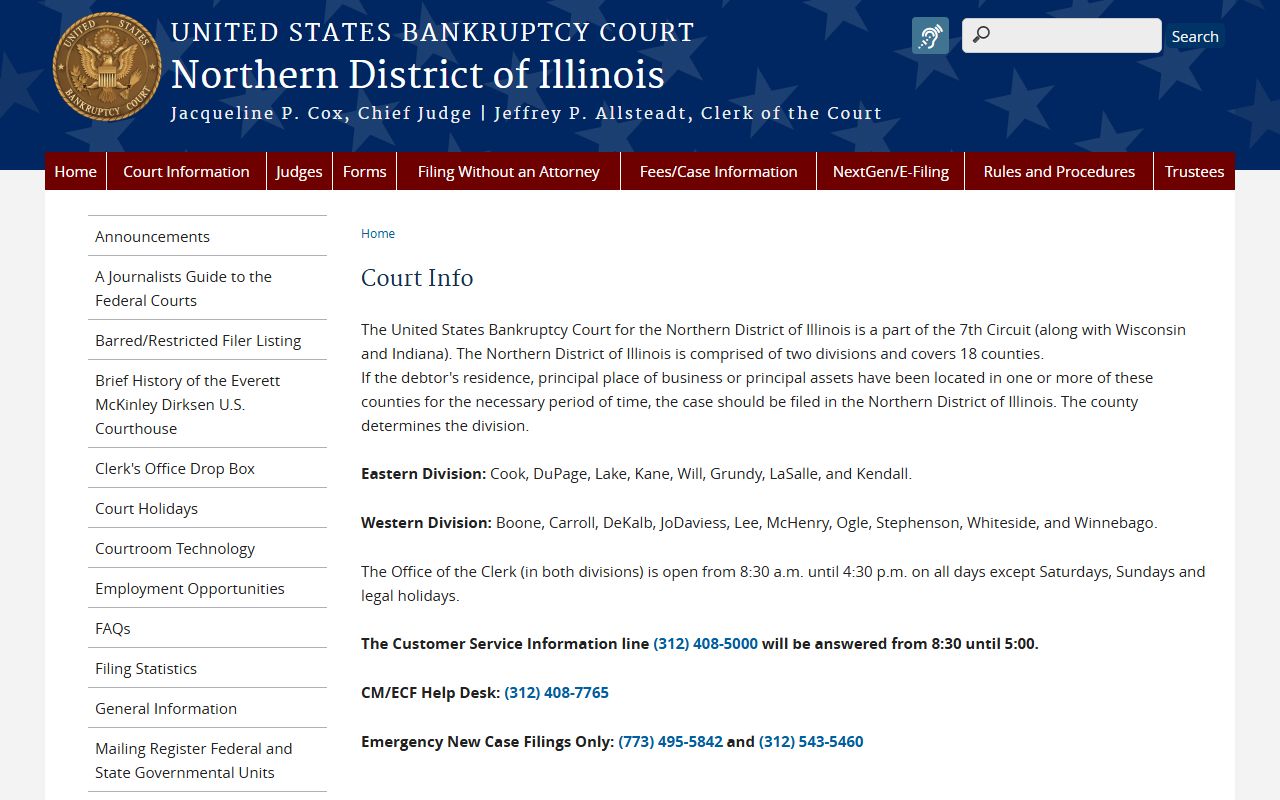
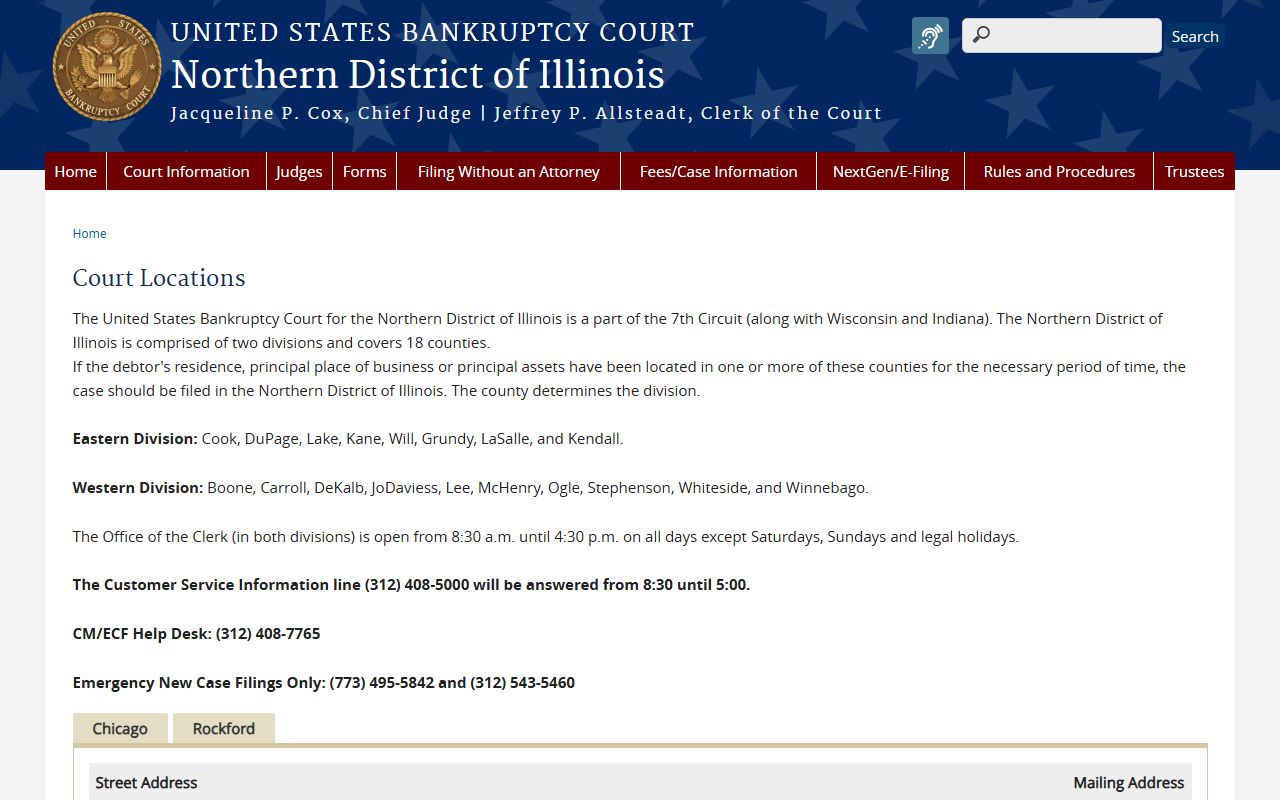
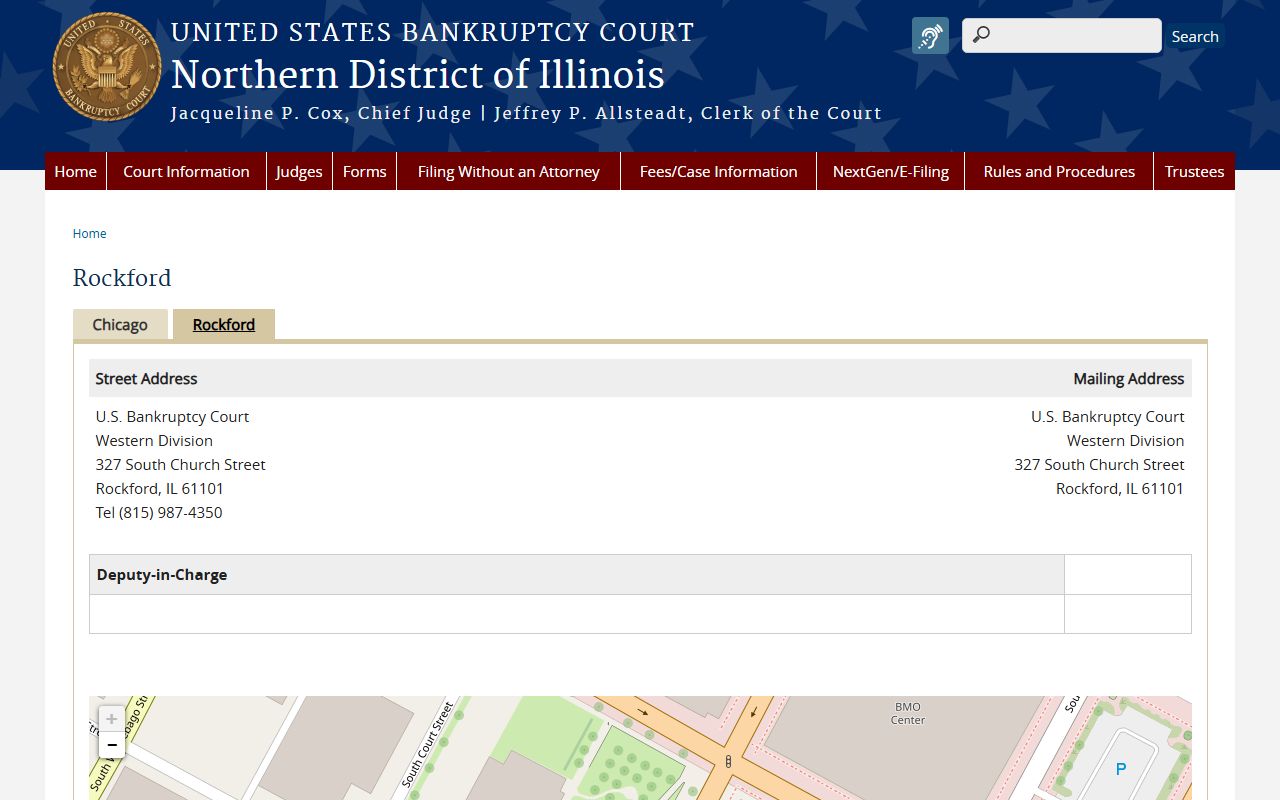
The U.S. Bankruptcy Court for the Northern District of Illinois is the busiest bankruptcy court in the state. It covers 18 counties split into two divisions. The Eastern Division sits in Chicago at 219 S. Dearborn and handles cases from Cook, DuPage, Lake, Kane, Will, Grundy, LaSalle, and Kendall counties. The Western Division is at 327 South Church Street in Rockford. It covers Boone, Carroll, DeKalb, JoDaviess, Lee, McHenry, Ogle, Stephenson, Whiteside, and Winnebago counties. Under 28 U.S.C. § 1408, you must file where you have lived for the greater part of the last 180 days. The county you live in sets which division gets your case. Chief Judge Jacqueline P. Cox leads this court. Jeffrey P. Allsteadt serves as Clerk. Reach customer service at (312) 408-5000 from 8:30 AM to 5:00 PM.
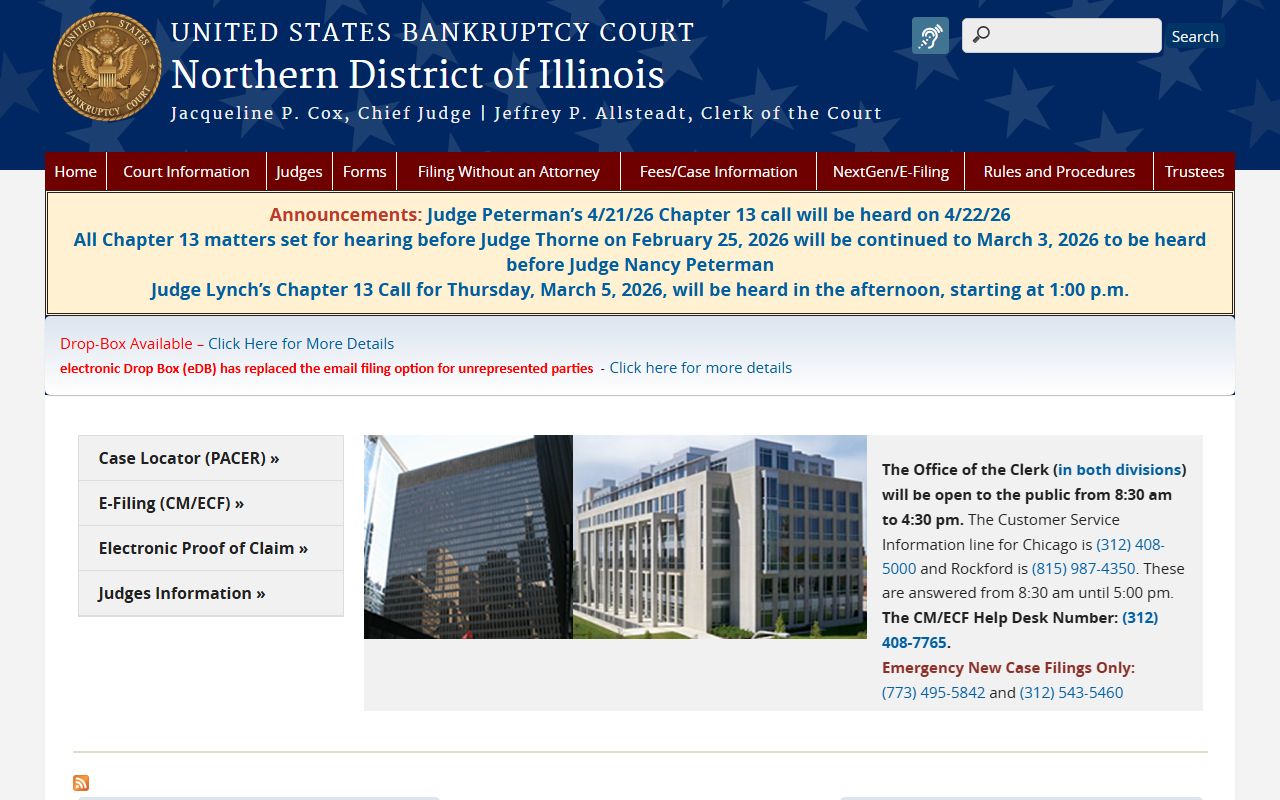
The Northern District court information page has details on office hours, filing rules, and contact numbers for bankruptcy records. The Clerk's Office opens at 8:30 AM and closes at 4:30 PM on weekdays. The CM/ECF Help Desk number is (312) 408-7765 for filing questions. Emergency new case filings can be made after hours by calling (773) 495-5842 or (312) 543-5460. The Electronic Drop Box has replaced the old email filing option for people who do not have a lawyer. You can use it to submit papers outside of regular hours for bankruptcy cases in the Northern District of Illinois.
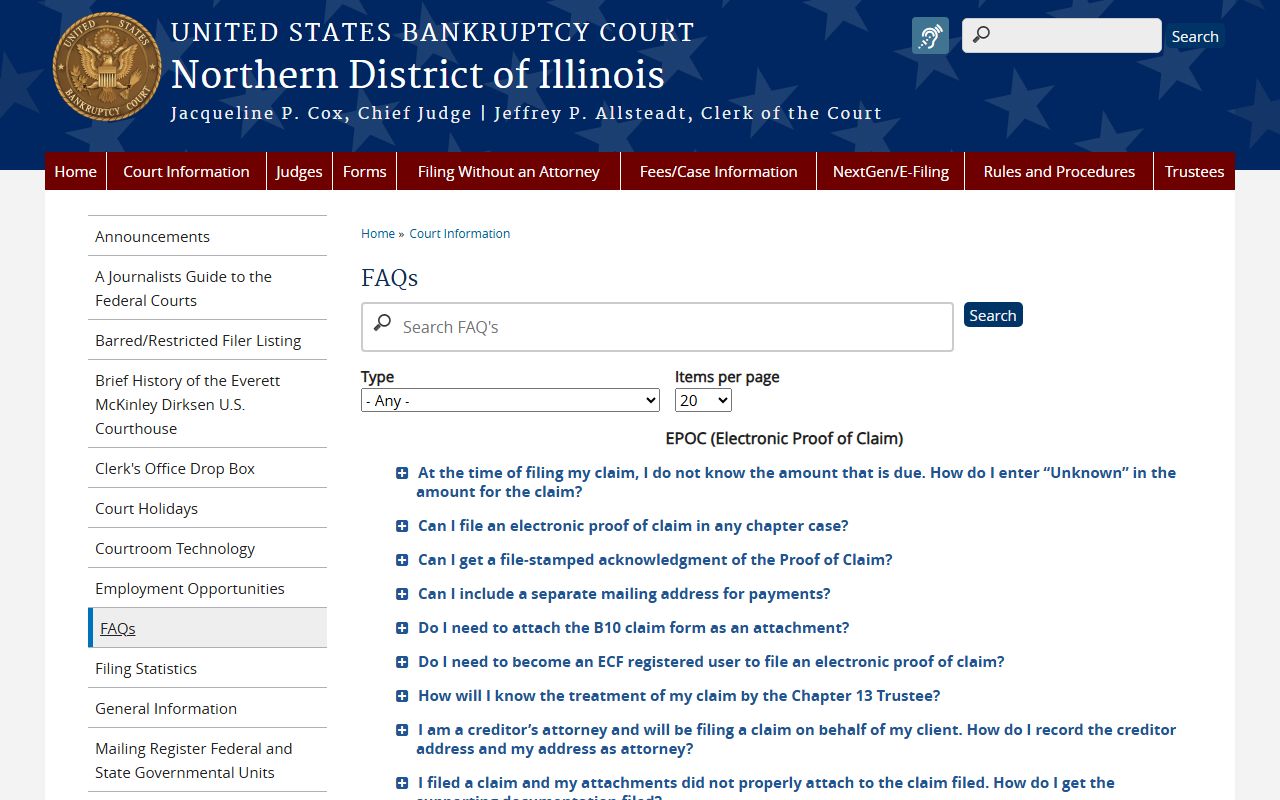
The court FAQ page answers common questions about filing and searching bankruptcy records in Illinois. It covers PACER accounts, CM/ECF logins, and proof of claim steps.
The Chicago office at 219 S. Dearborn handles most of the Northern District's caseload for bankruptcy records. Cook County alone has over 5 million people. The Rockford office serves the ten western counties. Both accept walk-in visitors during business hours. You can view case files, get copies, and file new documents at either location.
Central District Bankruptcy Records
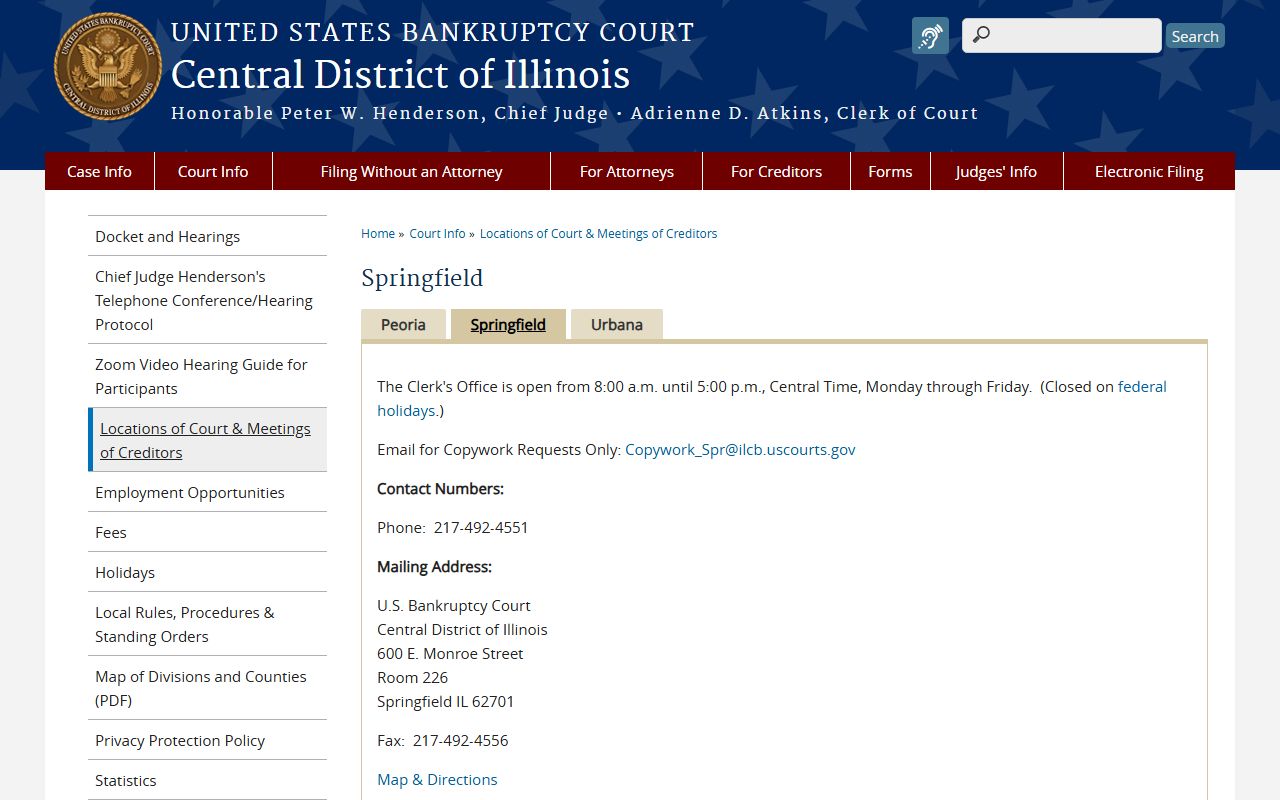
The U.S. Bankruptcy Court for the Central District of Illinois serves 46 counties across three divisions. The Springfield Division covers 19 counties including Sangamon, McLean, and Macon. The Peoria Division handles 16 counties including Peoria, Rock Island, and Tazewell. The Urbana Division serves 11 counties including Champaign, Kankakee, and Vermilion. Chief Judge Peter W. Henderson leads the court. Adrienne D. Atkins serves as Clerk. The Springfield office sits at 600 E. Monroe Street, Room 226, and can be reached at (217) 492-4551. You can also call the Voice Case Information System at 1-866-222-8029 for case status updates on bankruptcy records in the Central District of Illinois.
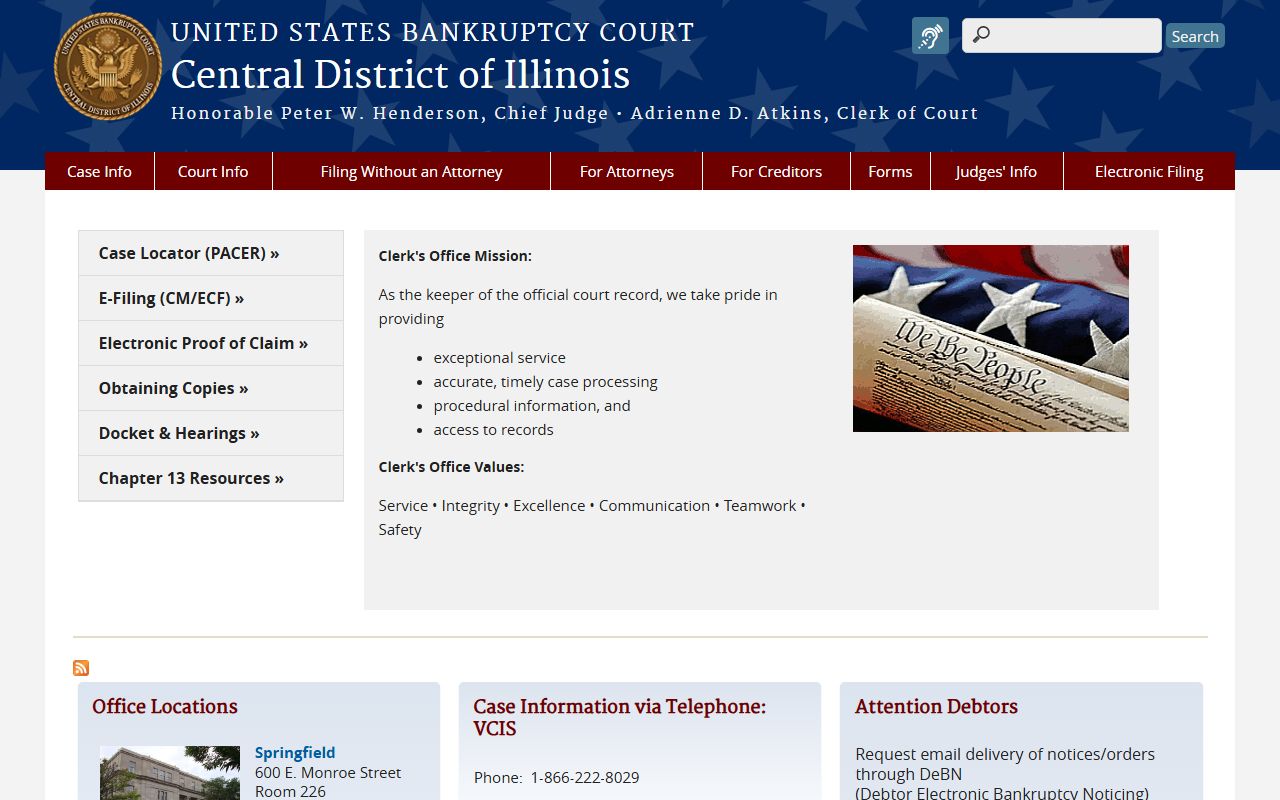
The Springfield office handles copywork requests by email at Copywork_Spr@ilcb.uscourts.gov. Hours run from 8:00 AM to 5:00 PM Central Time, Monday through Friday. Self-represented debtors can submit documents through the Electronic Document Submission System. The court also offers the eSR Bankruptcy Petition Preparation System, which helps people file Chapter 7 and Chapter 13 cases on their own without hiring a lawyer for their bankruptcy case in Illinois.
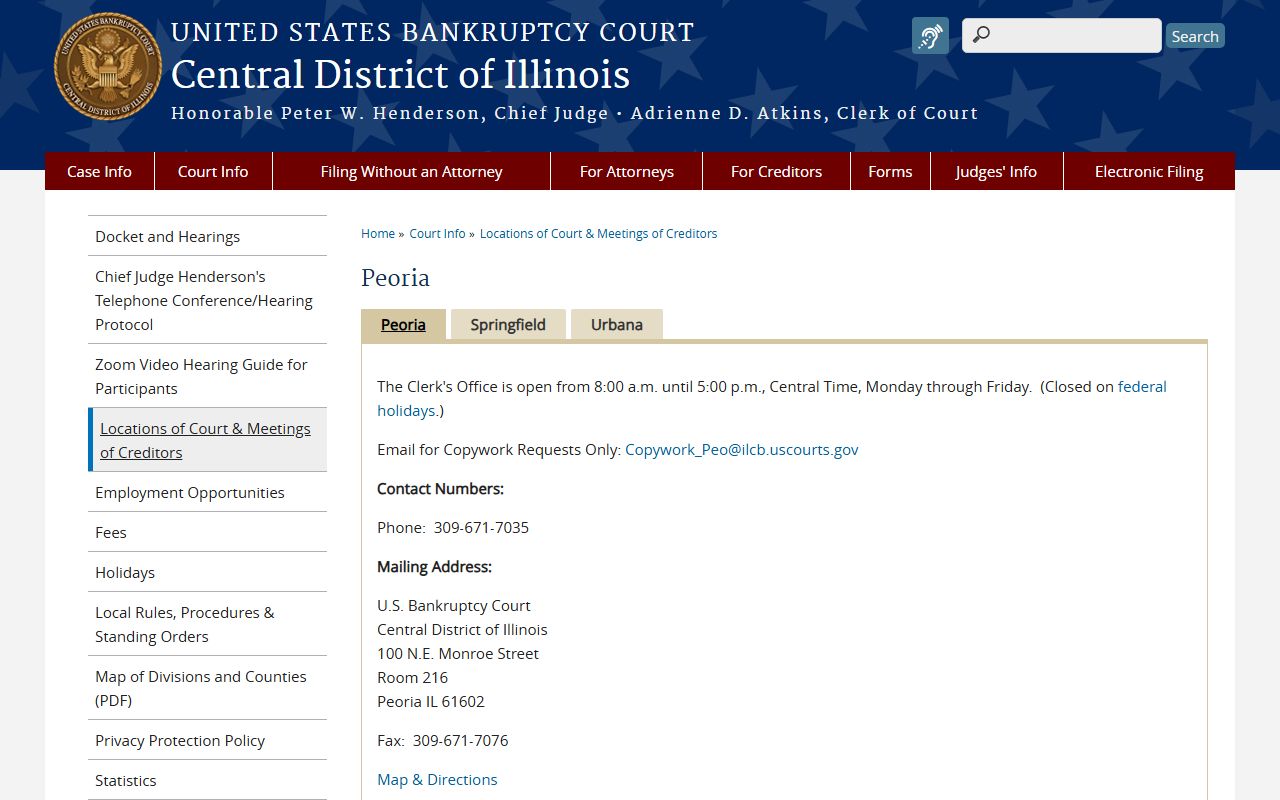
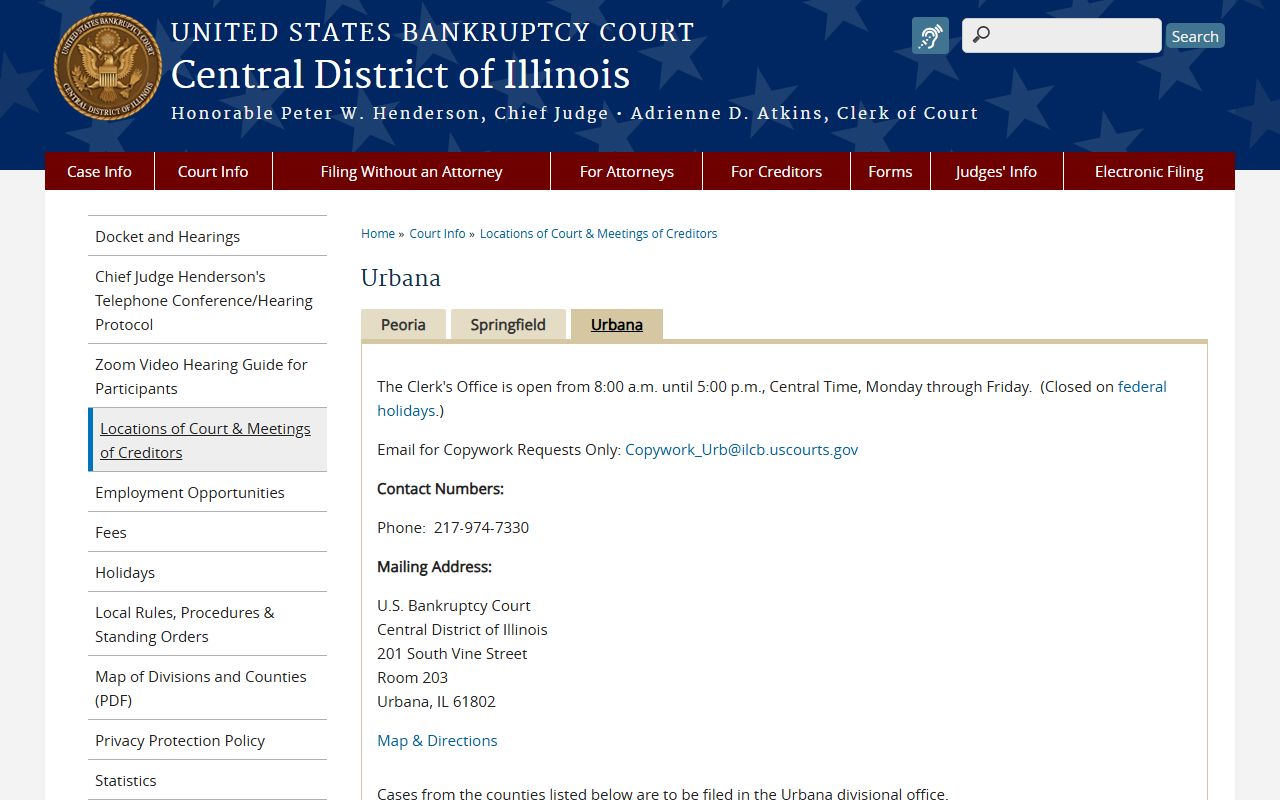
The Peoria office is at 100 N.E. Monroe Street, Room 216. Call (309) 671-7035 for help with bankruptcy records. Send copywork requests to Copywork_Peo@ilcb.uscourts.gov. The Urbana office sits at 201 S. Vine Street, Room 203, and takes calls at (217) 974-7330.
Southern District Bankruptcy Records
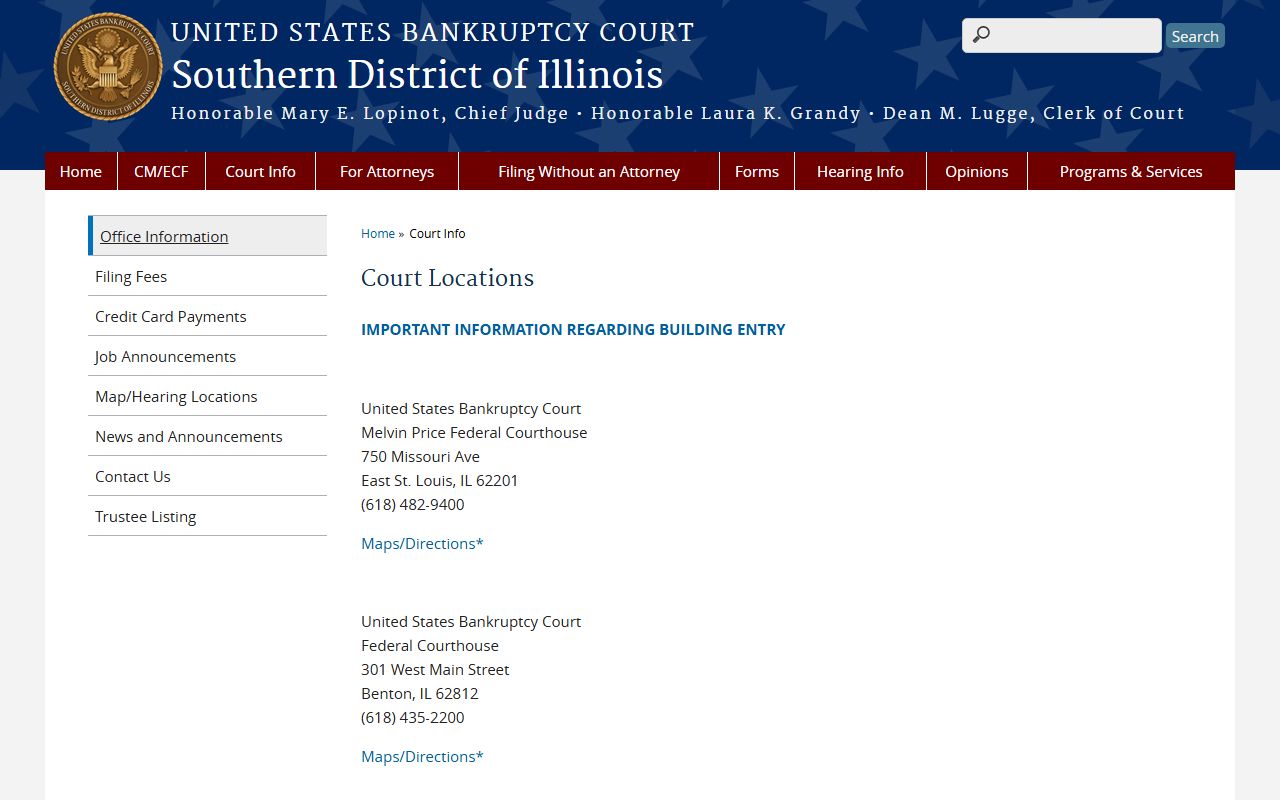
The U.S. Bankruptcy Court for the Southern District of Illinois covers 38 counties with offices in East St. Louis and Benton. Chief Judge Mary E. Lopinot and Judge Laura K. Grandy hear cases. Dean M. Lugge serves as Clerk of Court. The East St. Louis office is at the Melvin Price Federal Courthouse, 750 Missouri Ave. Call (618) 482-9400. The Benton office is at 301 West Main Street. Call (618) 435-2200. Both offices are open Monday through Friday from 8:00 AM to 4:30 PM. The CM/ECF Help Desk can be reached at (618) 482-9075 during business hours for questions about bankruptcy records in the Southern District of Illinois.
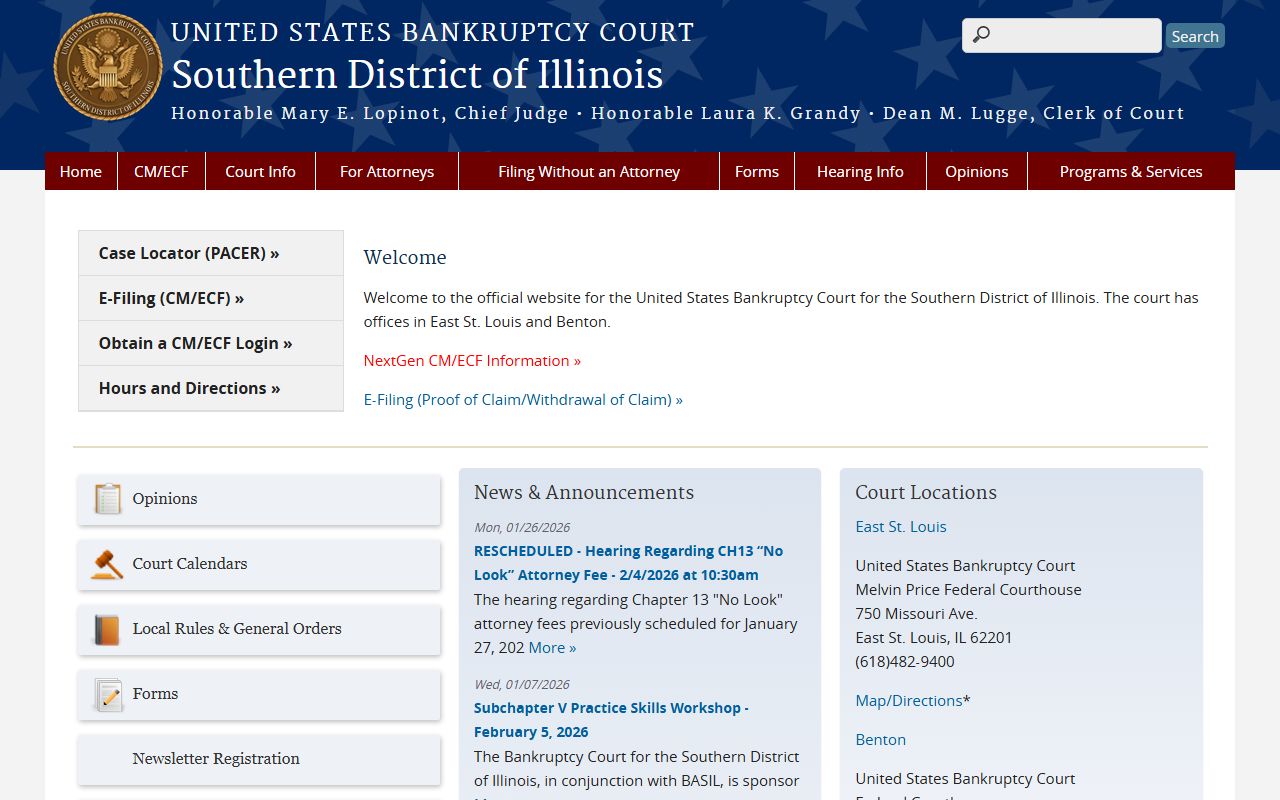
The court's locations page lists both offices with maps and driving directions. Building entry rules apply at both federal courthouses. Firearms are not allowed under Section 65 of the Illinois Firearm Concealed Carry Act. You must pass through security when you visit to search bankruptcy records at the Southern District of Illinois.
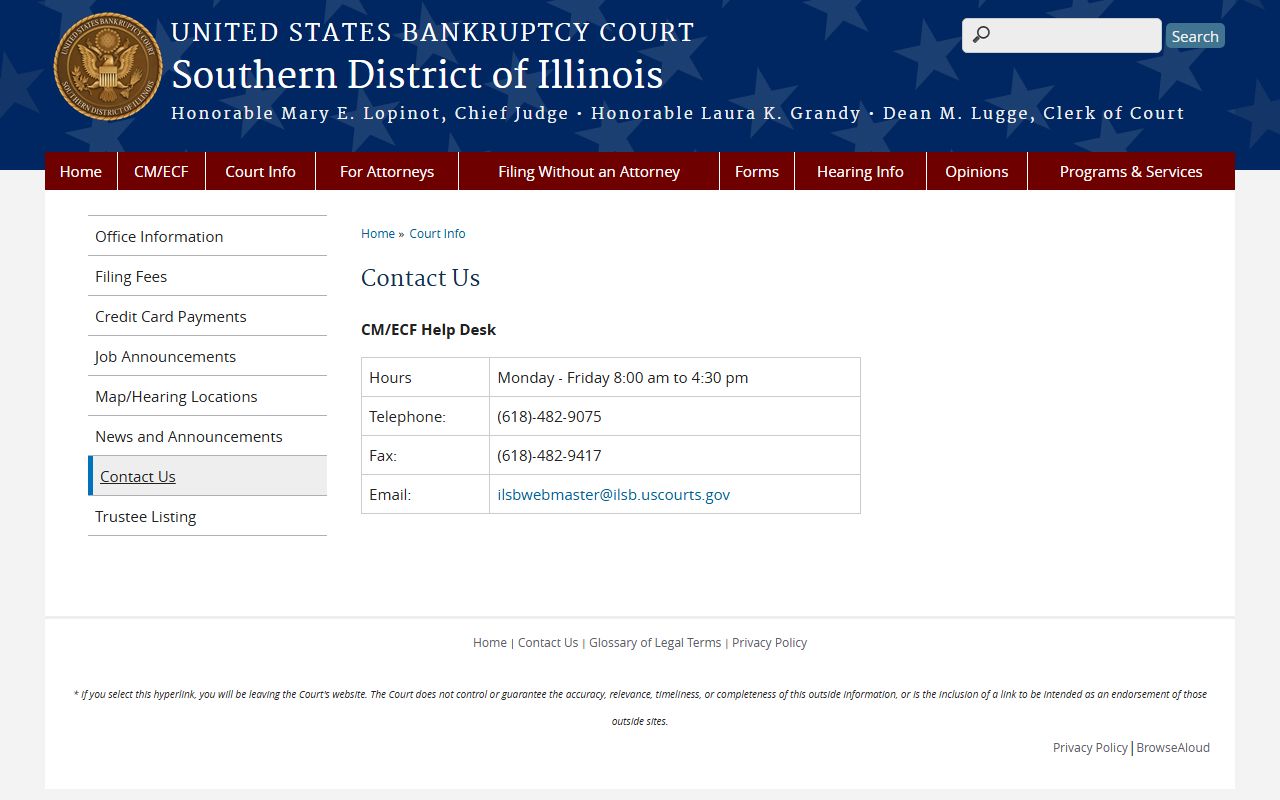
For questions about Southern District bankruptcy cases, reach the court by phone, fax at (618) 482-9417, or email at ilsbwebmaster@ilsb.uscourts.gov.
Filing Without an Attorney in Illinois
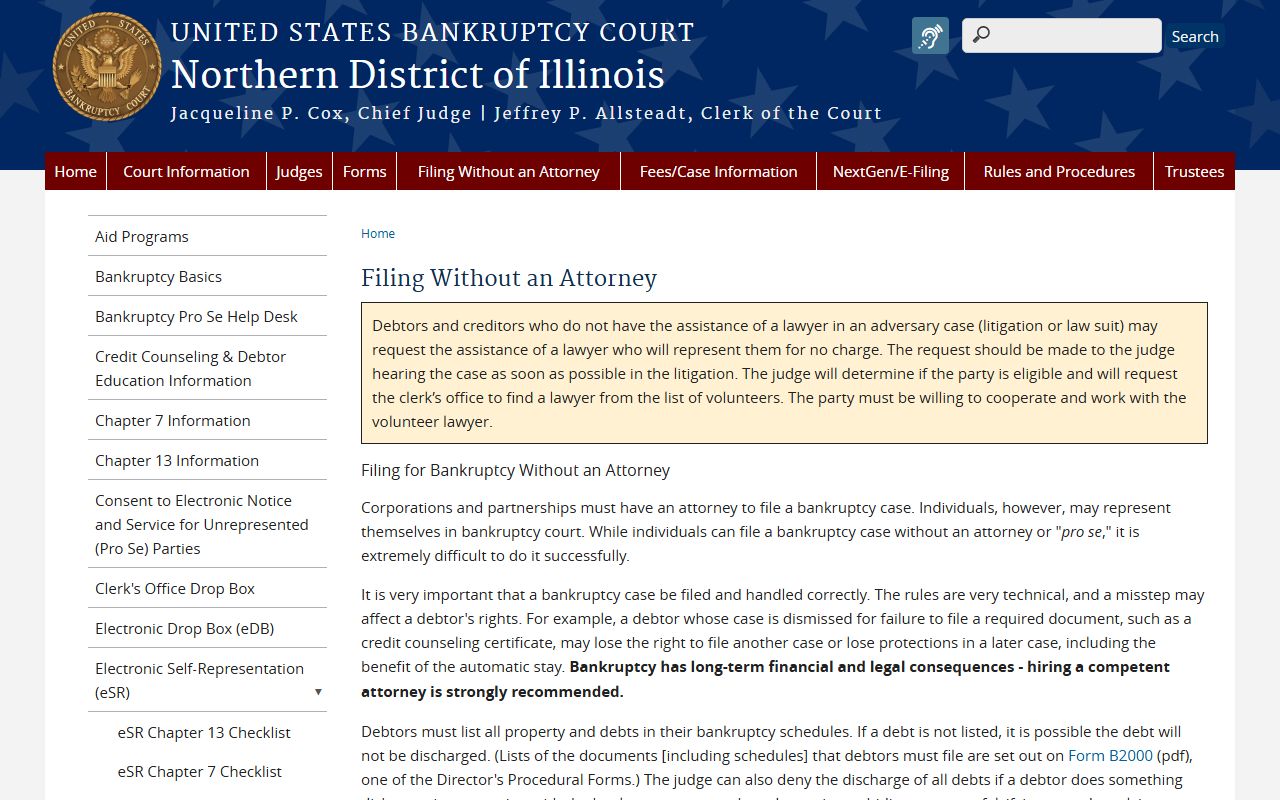
Many people file bankruptcy in Illinois without hiring a lawyer. This is called filing pro se. The Northern District has a page at ilnb.uscourts.gov with forms and guides for self-represented filers. The court cannot give legal advice. But the clerk's office can help you with the filing steps. Bankruptcy filings under Title 11 of the United States Code follow set rules, and the forms are the same whether you have a lawyer or not. Chapter 7 cases cost $338 to file. Chapter 13 cases cost $313. These fees can be paid in installments if you qualify for a payment plan with the court.
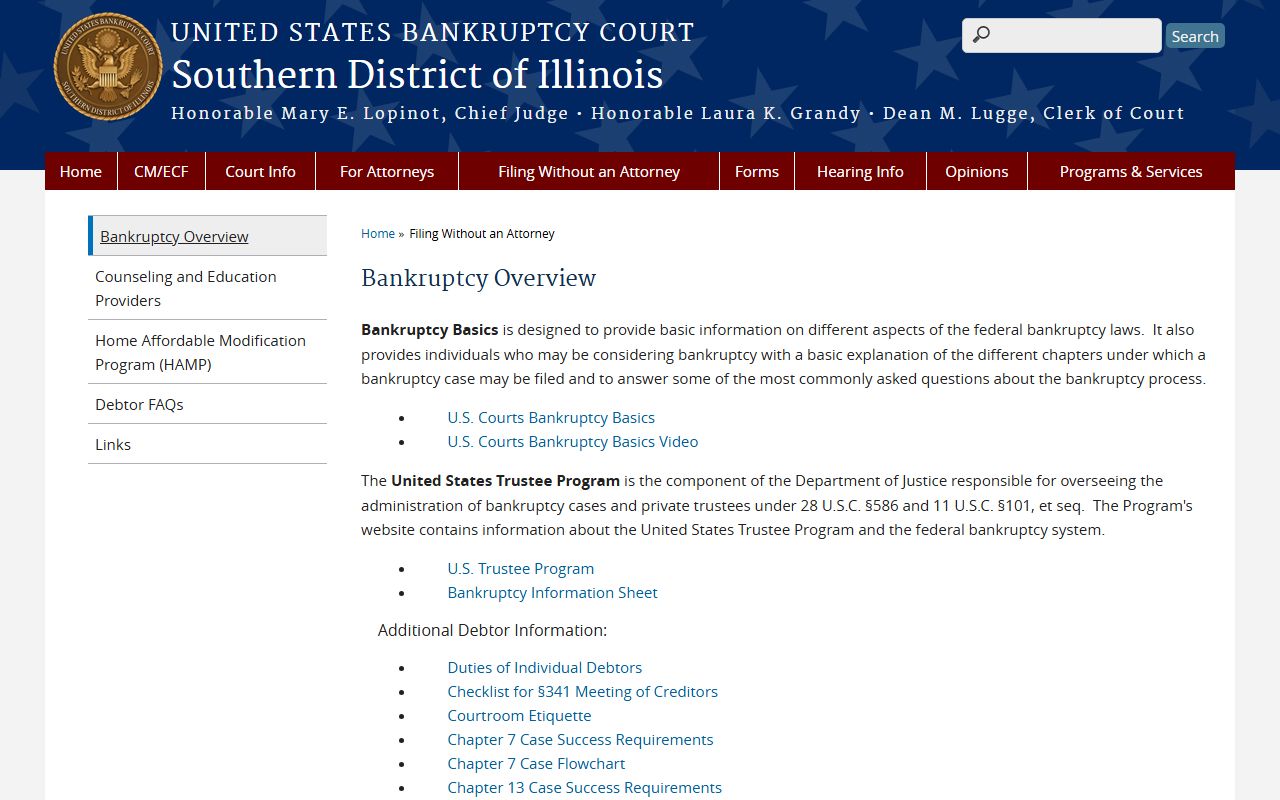
The Southern District also offers a bankruptcy overview page for people who want to file on their own in Illinois. It walks you through the basics of the process step by step. You need to complete credit counseling before you can file. The court needs a certificate from an approved agency. After you file, you must also take a financial management course before your debts can be discharged. These are federal rules that apply in all three Illinois districts for bankruptcy cases.
Note: Fee waivers may be available for filers who cannot afford the filing costs for bankruptcy in Illinois.
Illinois Bankruptcy Records Online Tools
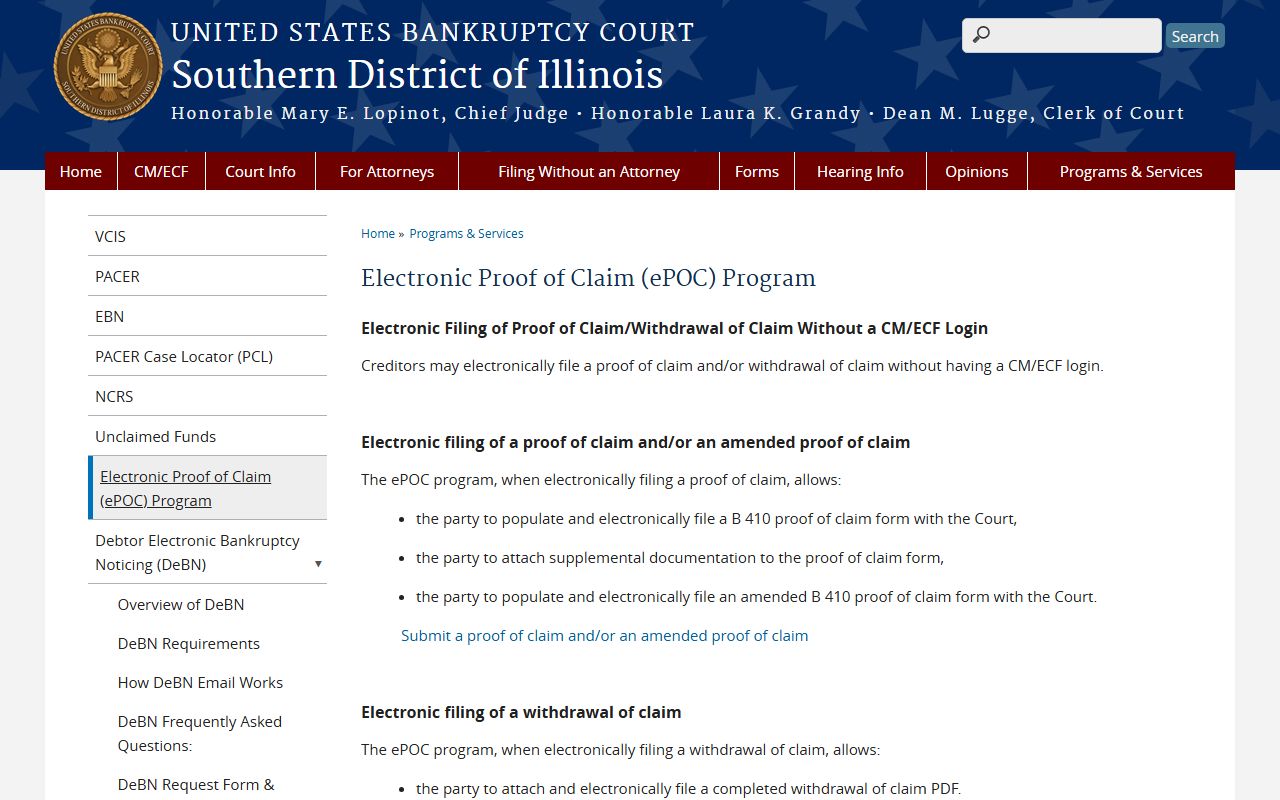
Illinois bankruptcy courts offer several online tools for creditors, debtors, and the public. The Electronic Proof of Claim system lets creditors file claims online in the Northern District. You do not need to be a registered CM/ECF user to file an electronic proof of claim in most cases. The system handles claims in Chapter 7, Chapter 11, and Chapter 13 bankruptcy cases. Check the court's EPOC page for rules on which case types accept electronic claims in Illinois.
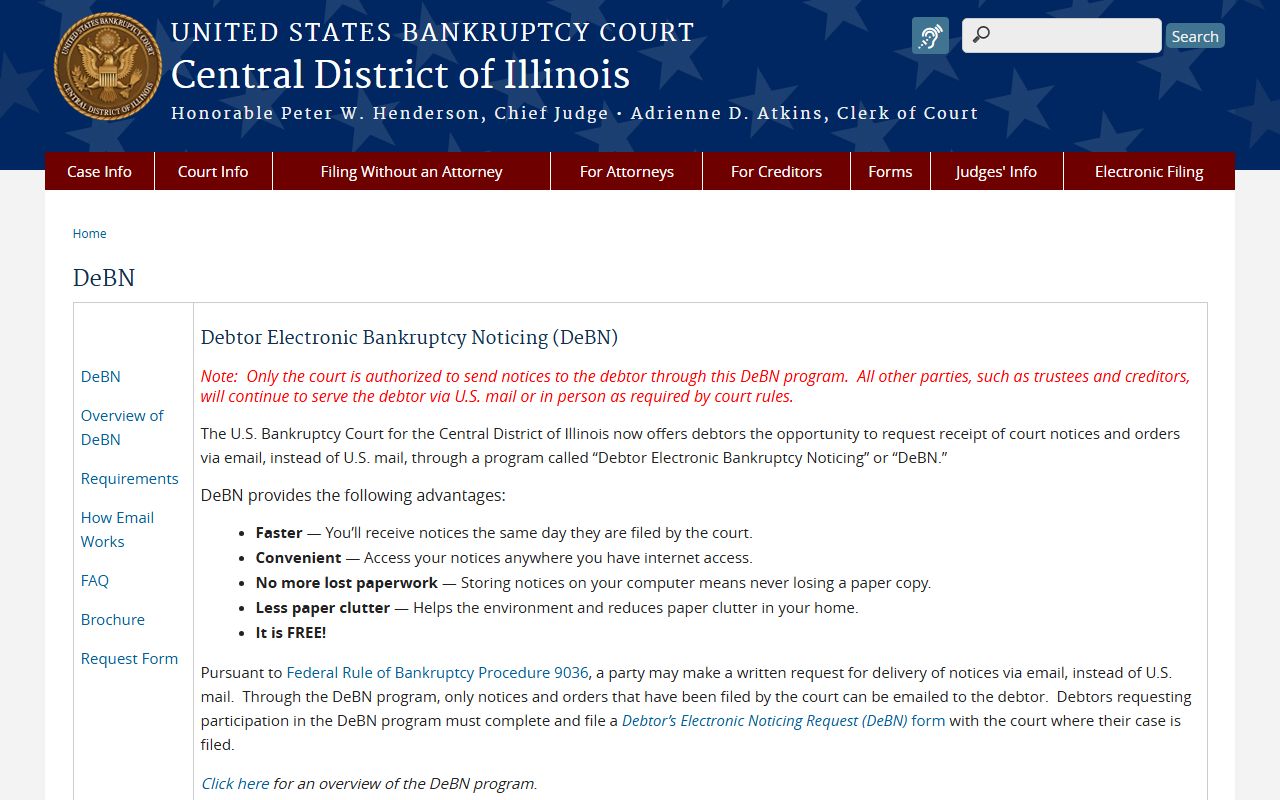
The Central District runs the DeBN system for Debtor Electronic Bankruptcy Noticing. This lets debtors get court notices and orders by email instead of postal mail. It is faster and free to use. Sign up on the court's website. The system sends notices as soon as the court issues them for your bankruptcy case in Illinois.
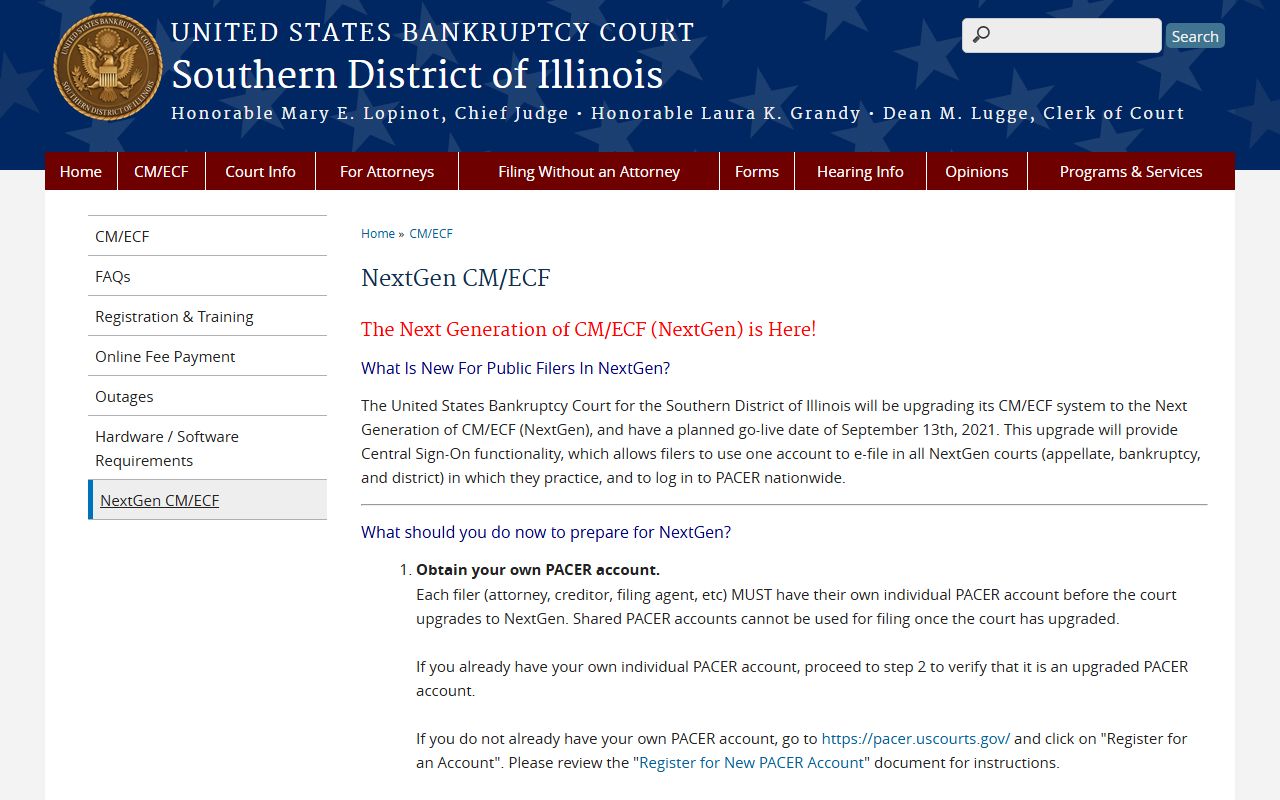
The Southern District moved to NextGen CM/ECF for its filing system. This newer version uses your upgraded PACER login as a single sign-on for both filing and searching bankruptcy records in Illinois.
Illinois Bankruptcy Court Rules
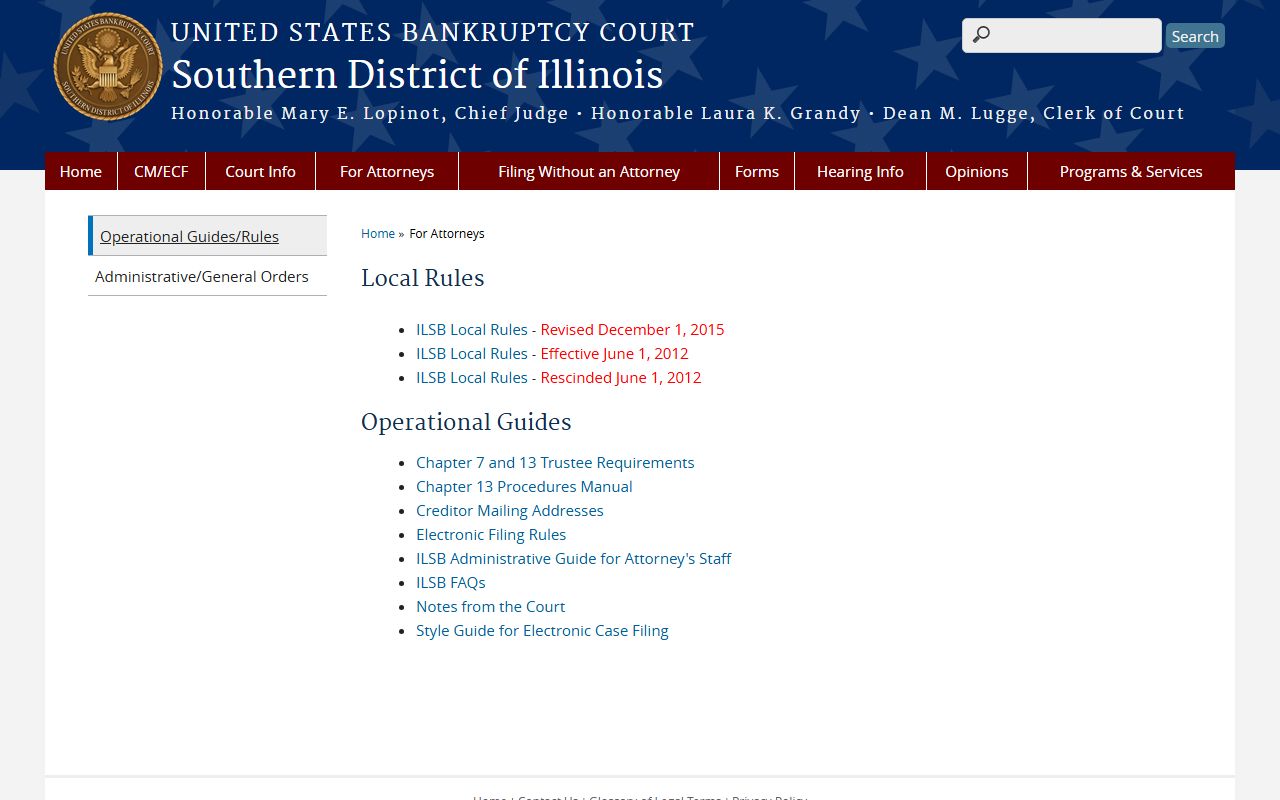
Each Illinois district has its own set of local rules that add to the Federal Rules of Bankruptcy Procedure. The Southern District's local rules are posted on the court website. The Northern District and Central District also post their local rules online. You must follow both the federal rules and local rules when filing bankruptcy in Illinois. Local rules cover motion practice, hearing steps, and how to format documents for the court.
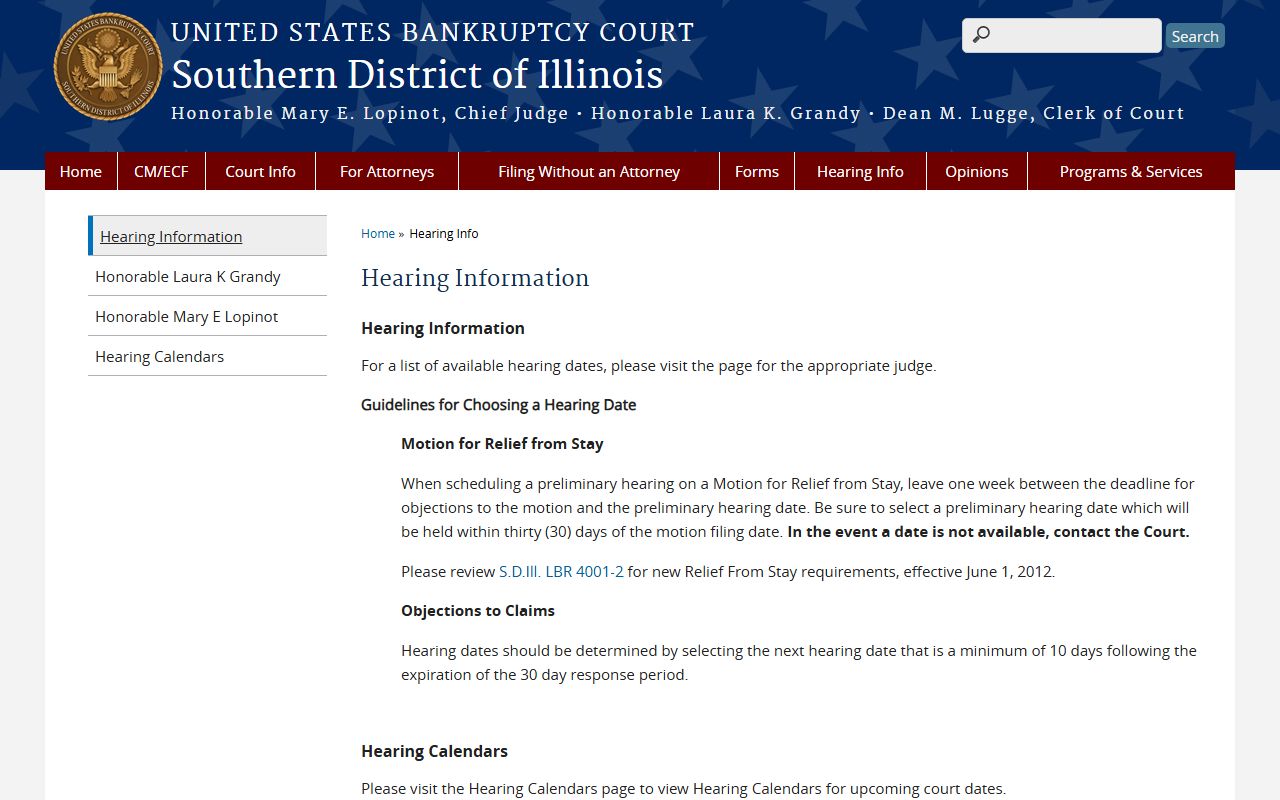
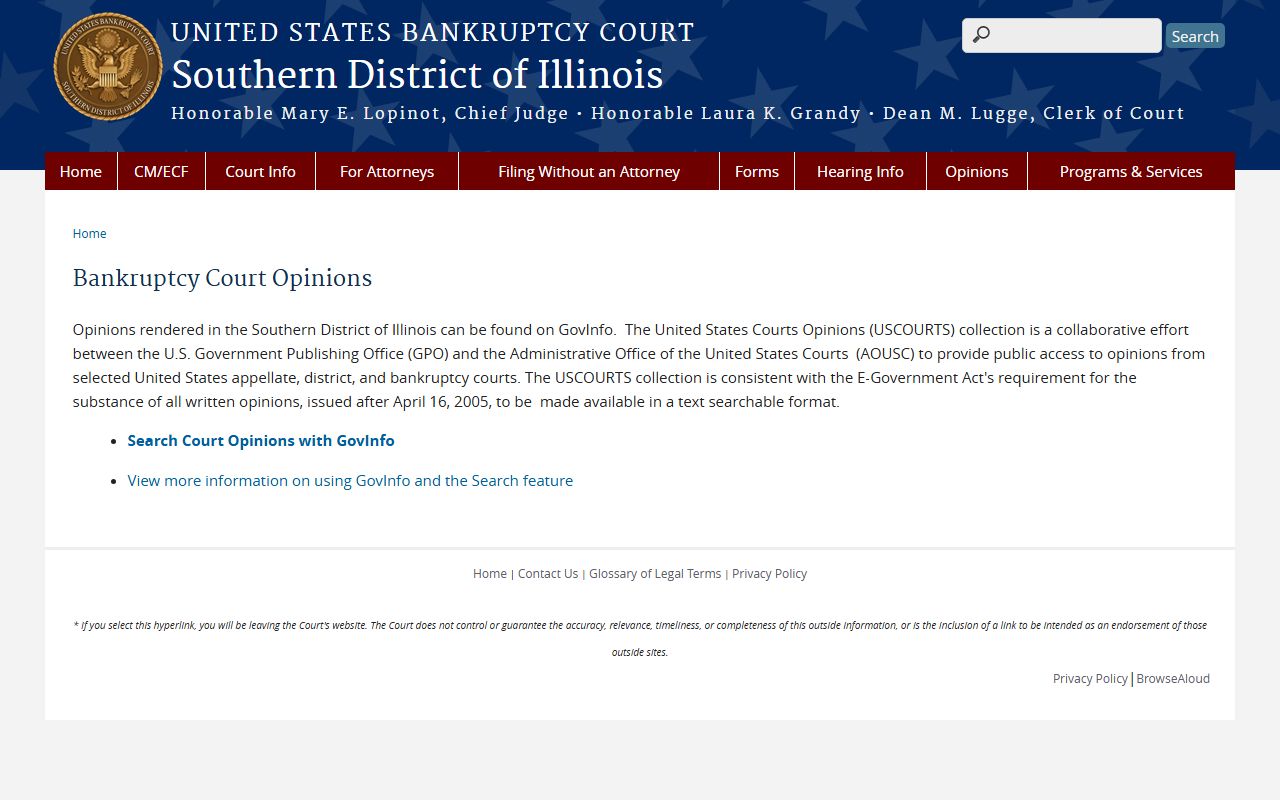
The Southern District posts hearing information online so parties can check dates and times for their bankruptcy cases in Illinois. Court calendars show when cases are set for hearing. The court also puts out written opinions that explain how judges read and apply bankruptcy law. These can help you see how the court handles certain types of cases and what the judges look for when they rule on motions in Illinois bankruptcy proceedings.
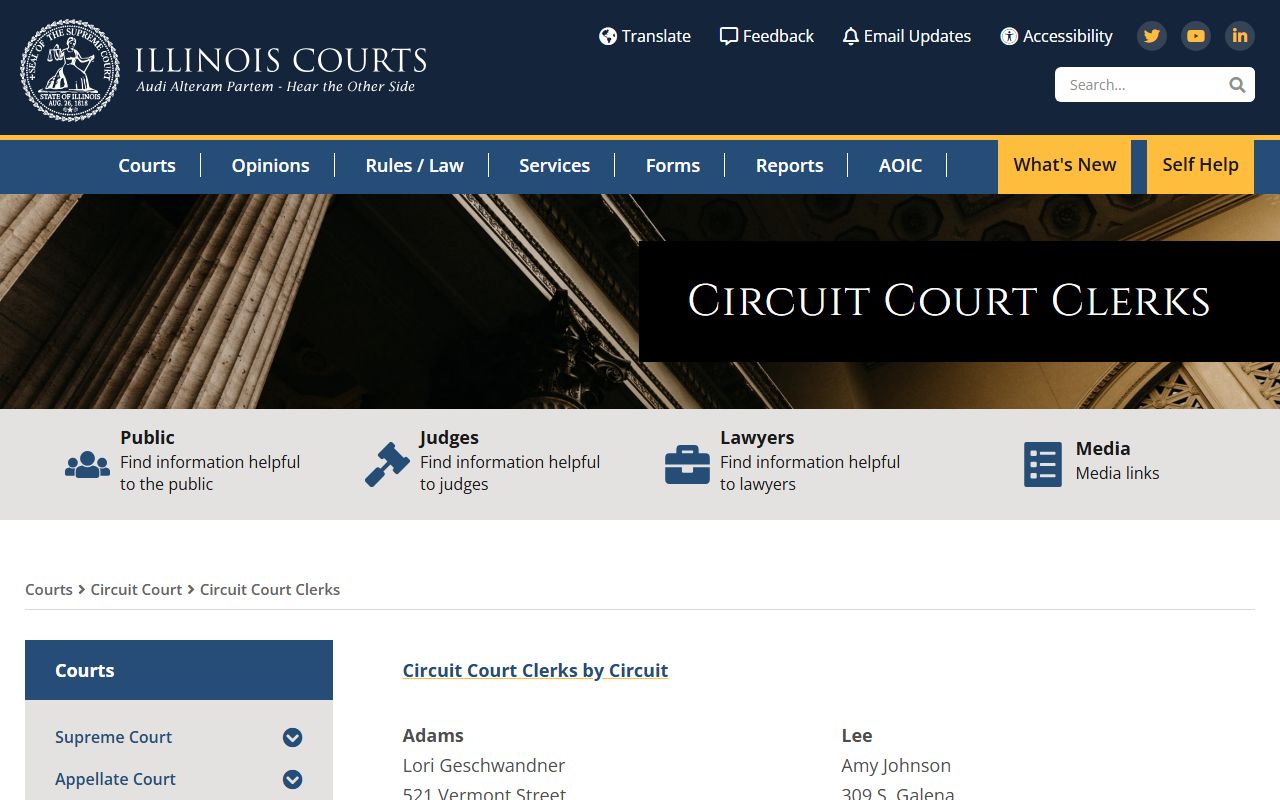
The Illinois circuit court clerks directory lists all 102 county clerks across the state. While bankruptcy is a federal matter, state circuit courts handle related issues like foreclosure and debt collection that often tie back to bankruptcy records in Illinois.
Browse Illinois Bankruptcy Records by County
Each county in Illinois falls under one of three federal bankruptcy districts. Pick a county below to find local court details, contact info, and resources for bankruptcy records in that area.
Bankruptcy Records in Major Illinois Cities
Residents in major Illinois cities file bankruptcy at the federal court for their district. Pick a city below to learn about bankruptcy records and local court resources.