
Search Chicago Bankruptcy Records
Chicago bankruptcy records are filed at the U.S. Bankruptcy Court for the Northern District of Illinois, Eastern Division. The court sits in the Everett McKinley Dirksen Federal Building in downtown Chicago. Cook County falls under this court's reach, and since Chicago is the county seat, all bankruptcy cases for city residents go through this one building. The clerk's office keeps every petition, schedule, plan, motion, and order in the case file. You can search these records through PACER or visit the courthouse in person to pull what you need.
Chicago Quick Facts
Chicago Bankruptcy Court Location
The bankruptcy court for Chicago is at 219 S. Dearborn Street in the Dirksen Federal Building. This is the main courthouse for all bankruptcy filings in Cook County. The building sits in the heart of the Loop, close to the Jackson Blue Line and Red Line stops. Parking garages are on Dearborn and nearby blocks, but most people take the train since downtown parking gets pricey fast.
| Court | U.S. Bankruptcy Court, Northern District of Illinois |
|---|---|
| Address | 219 S. Dearborn Street Chicago, IL 60604 |
| Phone | (312) 408-5000 |
| Hours | Monday through Friday, 8:30 AM to 4:30 PM |
| Website | ilnb.uscourts.gov |
You need a photo ID to get past security at the Dirksen Building. Cell phones are fine, but large bags and weapons are not allowed. The clerk's office is where you file new cases and look up old ones. Walk-in service ends at 4:30 PM sharp, so plan to arrive well before then if you want same-day help with bankruptcy records in Chicago.
How to Search Bankruptcy Records in Chicago
PACER is the fastest way to search for bankruptcy records in Chicago from home. The PACER Case Locator lets you look up any person or business by name. It pulls from all federal courts, so you will find Chicago cases along with any filings from other parts of the state or country. Set up a free account and you are ready to search. Most page views cost ten cents. If your total stays under $30 in a quarter, you pay nothing.
You can also use the Northern District's own CM/ECF system to pull case details. Lawyers file documents here, and the public can view them through a linked PACER account. This is the same system the court uses for everything, so it has the most current data. You get access to the full docket, motions, orders, and even the discharge notice once a case closes.
The Northern District website posts court opinions, hearing dates, and general info about how the court works. The site has a portal that shows Chicago bankruptcy records along with details on court locations, hours, and contact info for various departments within the building.
The Northern District court page shows the Chicago location and its address.
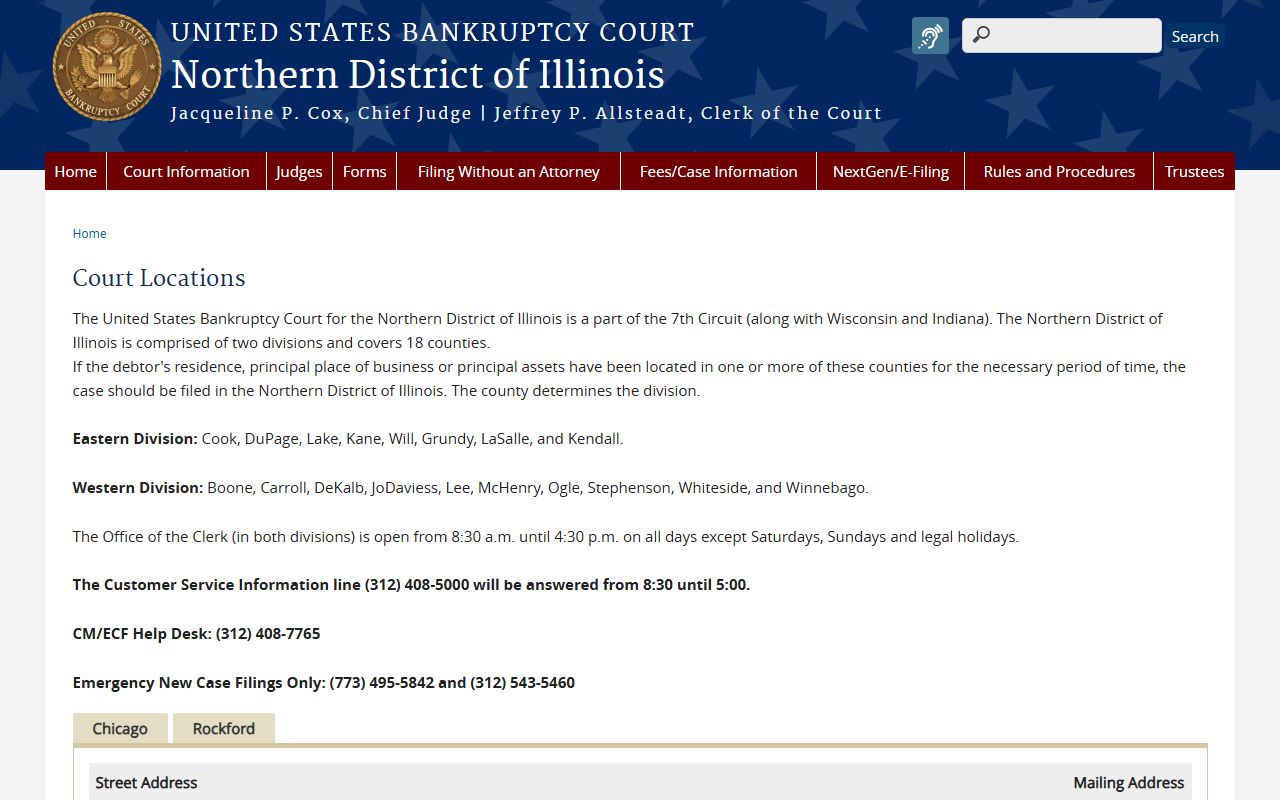
That page lists the building address, phone lines, and hours for the Chicago office. It also notes which judges sit in the Eastern Division.
Filing for Bankruptcy in Chicago
Under 28 U.S.C. § 1408, you file for bankruptcy where you have lived for the greater part of the last 180 days. Chicago residents file at the Northern District, Eastern Division. Chapter 7 costs $338 to file. Chapter 13 costs $313. Chapter 11 is $1,738. You can ask the court to let you pay in installments if the fee is a hardship. Some filers qualify for a full fee waiver under Chapter 7.
The process starts with the petition. You list all your debts, assets, income, and expenses on official bankruptcy forms. These forms are long. Most people in Chicago use a lawyer, but you can file on your own. The Northern District has a filing without an attorney page that lays out what pro se filers need to know. It covers required forms, credit counseling rules, and local requirements for the Chicago court.
Once you file, the court creates a case record. A trustee gets assigned. The automatic stay kicks in under 11 U.S.C. to stop most collection actions against you. The 341 meeting happens about 30 to 40 days after filing. Creditors can attend and ask questions. Most Chapter 7 cases in Chicago wrap up in three to four months. Chapter 13 plans last three to five years.
All of these filings become public bankruptcy records. Anyone can look them up. The petition, schedules, plan, trustee reports, and the final discharge order all sit in the case file at the Chicago court.
Cook County Circuit Court and Bankruptcy Records
Bankruptcy is a federal matter. State courts do not handle bankruptcy cases. But the Cook County Circuit Court deals with many related issues that come up before, during, or after a bankruptcy case in Chicago. Foreclosure lawsuits, debt collection cases, and judgment liens all go through the Cook County Circuit Clerk's office at 50 W. Washington Street, Suite 1001. The phone number is 312-603-5030.
If a creditor has a state court judgment against you in Cook County and you then file for bankruptcy in Chicago, the federal case takes over. The automatic stay stops the state case. But you may still need records from the Cook County court to show what debts exist. Similarly, once a bankruptcy discharge wipes out a debt, you may need to go back to the Cook County court to get a judgment lien released. These two court systems overlap more than people think.
The Northern District court homepage shows how bankruptcy cases flow through the Chicago system.
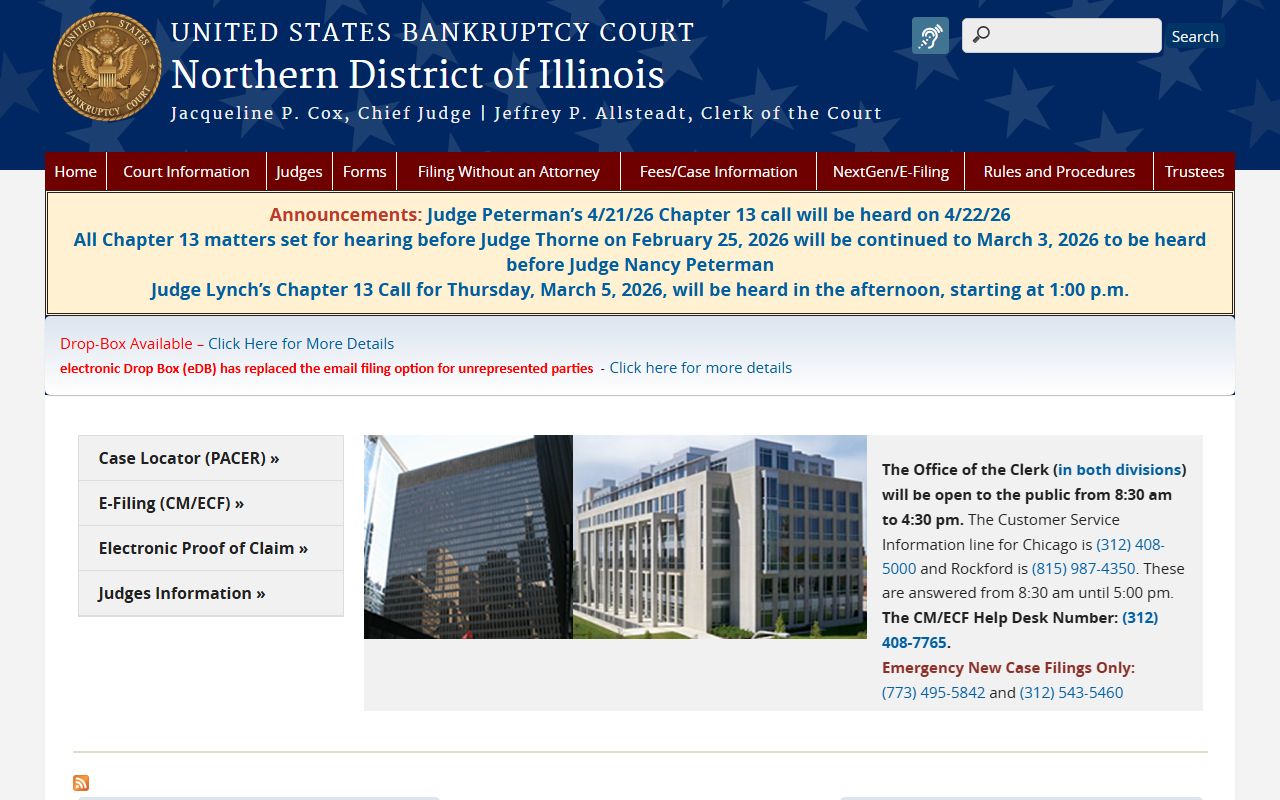
That page links to filing guides, local rules, and the electronic filing system that Chicago attorneys use daily.
Chicago Bankruptcy Records and Federal Law
Federal law controls everything about bankruptcy in Chicago. Under 28 U.S.C. § 1334, the district court has original and exclusive jurisdiction over all bankruptcy cases. The bankruptcy court acts as a unit of the district court. Judges in Chicago hear cases under referral from the Northern District.
The Bankruptcy Code at 11 U.S.C. sets out the rules for who can file, what debts can be discharged, how property is treated, and what creditors can do. Illinois has its own set of exemptions that apply to Chicago filers. These exemptions decide what property you can keep. Most Chicago debtors use the Illinois exemptions rather than the federal set, though some choose the federal list if it protects more of their assets. Your lawyer or the court can explain which set works best for your situation.
Legal Help in Chicago
Chicago has more legal aid options than most cities in the state. The Legal Aid Society of Metropolitan Family Services runs a bankruptcy help desk at the Dirksen Federal Building. They assist people who qualify based on income. You do not need an appointment for the help desk, but call ahead to check the schedule.
The Chicago Bar Association Lawyer Referral Service can match you with a bankruptcy attorney for a first meeting at a low cost. The Illinois Courts website lists self-help resources and links to legal aid groups across the state. Many Chicago law school clinics also take bankruptcy cases. The University of Chicago, Loyola, and John Marshall all run clinics where law students help real clients under attorney oversight. If you cannot afford a lawyer, these clinics are worth a call.
Pro se filers in Chicago can use the court's own resources. The clerk's office has packets with the forms you need. Staff cannot give legal advice, but they can point you to the right forms and tell you what is missing from your filing. The self-representation page on the court site breaks down the steps for people filing without a lawyer in Chicago.
Cook County Bankruptcy Records
Chicago is the county seat of Cook County. All bankruptcy filings for Chicago residents go through the federal court system, but the Cook County Circuit Court handles many related civil matters. For more on county-level court records, fee schedules, and other resources in Cook County, visit the full county page.
Nearby Cities
Several large cities sit close to Chicago and share the same federal district. Residents in these areas file their bankruptcy cases at the Northern District, Eastern Division, just like Chicago filers do.